
















































0%

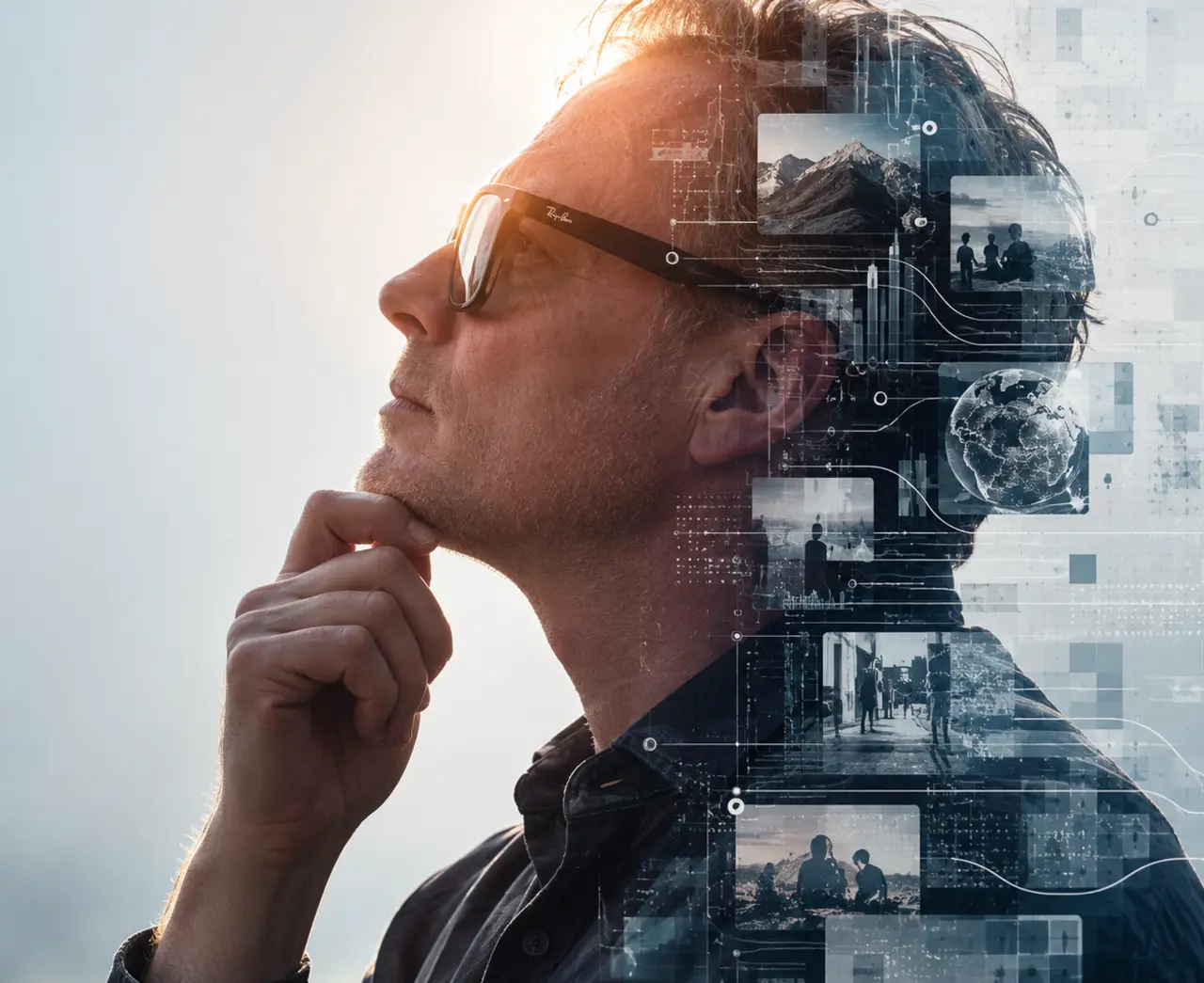
Should we build AI into our product?

"We need some AI in there." That might be the right call. I'd start by figuring out which problem the technology is actually meant to solve.

AI has become markedly easier to build into digital products.

You no longer need a team of specialists to analyse documents, categorise text, generate content or let users search through large volumes of information. Many of these capabilities can be wired in through an API, and a prototype can often be built in relatively little time.

That opens the door to solutions that would have been expensive or unrealistic just a few years ago.

And it makes it tempting to start with the technology.

What are we trying to make better?

If a client asked me to build AI into an existing product, I'd start with the problem.

Do employees spend too long finding information? Does someone have to manually read and categorise hundreds of documents? Does support keep answering the same questions over and over? Is there a large amount of unstructured text that requires manual work?

Then we have something worth investigating.

It's the same approach I'd use for an app, a new CMS or an integration. First we need to understand the task. Only then can we choose the technology.

AI changes the range of what's possible. That order is the one I'd stick to.

AI can sit beneath the surface

The chat window has become the most visible image of AI. That's why so many ideas quickly end up as a text field where the user can "ask our AI".

Imagine instead a company with 20,000 documents. Employees spend time every day finding the right document, and then the relevant information inside it.

That's where AI could make the search better.

The user can still be met with an ordinary search field, a list of results and a few filters. Beneath the surface, AI can help understand the question, find relevant content or summarise the results.

The same applies to categorisation, handling enquiries, suggesting copy and a range of other tasks.

An AI feature can create real value without looking like AI at all.

What happens when it gets it wrong?

AI introduces a different kind of uncertainty than the one we normally work with in software.

Traditional code is typically deterministic. Given the same conditions, we expect the same result.

An AI model can produce something that looks convincingly correct, even when it's wrong.

That's why the consequence of a mistake matters at least as much as the model's accuracy.

If AI suggests a poor phrase for a product description, the user can edit it. If it miscategorises a document, the result can be presented as a suggestion awaiting approval.

If it instead forwards incorrect information to another system, or takes an action on the customer's behalf, the risk is a different one.

The same model can therefore be excellent for one task and unsuitable for another.

Maybe the AI should suggest – not decide

There's a real difference between:

"Here are the three documents I think are relevant."

and:

"Based on the documents, I've carried out this action."

In many products it makes sense to let the AI handle the time-consuming groundwork, and let a human make the final call.

The AI can read, sort, summarise and suggest. The employee checks the result.

If a task used to take 20 minutes and now takes two minutes to verify, that's already meaningful value created.

Full automation doesn't have to be the goal, then. The right boundary depends on the task, and on what happens when something goes wrong.

A flashy prototype is the easy part

One of the impressive things about current AI tools is how quickly you can get something working.

Take 50 documents, connect them to a model, build a simple interface. Before long, you can have a demo that answers questions about the material surprisingly well.

Then reality sets in.

This is where a demo turns into software that has to work every day.

AI has made it very fast to prove that an idea can work. Making it stable, economically sound and operable is still part of product development.

What data should the model have access to?

An AI feature is rarely better than the material it has to work with.

If it's meant to answer questions about a company's documents, we need to decide which documents it's allowed to see, how they're made available, and who's allowed to ask about what.

There's a difference between public product descriptions and internal documents containing customer information.

That affects the architecture.

Where is the data processed? What gets stored? What information is sent to an external provider? How do we handle user permissions? And what happens when a document is edited or deleted in the original system?

AI can absolutely be part of sensitive, business-critical workflows. It just requires that data and access are treated as part of the solution from the start.

Some problems have a simpler solution

AI is particularly interesting when a task has previously been hard to describe with ordinary rules.

Understanding the meaning of a text, finding patterns across documents, or formulating an answer from unstructured information are good examples.

Other tasks are already very precise.

If a system needs to find all unpaid invoices from the last 30 days, a database query can deliver a fast, predictable answer.

If support spends time answering the same question repeatedly, the cause might also be that the answer is hard to find on the website. In that case, better structure or search may be more valuable than putting a chatbot on top.

What matters is which solution removes the problem with the least unnecessary complexity.

Start with the smallest useful task

I'd rarely start with the ambition of automating an entire process.

Find one narrow task.

Something people spend noticeable time on today. Something whose result can be evaluated. And ideally something where a mistake can be caught before it has serious consequences.

Build that part, and use real data.

If an employee normally spends ten minutes finding and summarising information from five documents, that's a fairly good starting point. If AI can help do it in two minutes with the same or better quality, we have something concrete to measure.

From there, we can decide whether the solution should grow.

It's cheaper to discover the limitations there than after building an entire AI platform around an idea.

So should we have AI?

Maybe.

I use AI myself every day, and the technology has already changed my own workflow. Tasks can be solved faster, more ideas can be tried, and things that used to require a lot of manual work can be automated in new ways.

That makes AI worth investigating.

But it doesn't change the order I'd work in.

Understand the problem. Find out what actually needs to get better. Try the smallest solution that can show whether the idea holds up. Then choose the technology that fits the task.

The question isn't whether we can build AI into the product.

We probably can.

The question is whether the product gets better for it.

Technical consulting

I help assess which problem an AI solution actually needs to solve, where it belongs in the architecture, and when a simpler solution is the right call.

Tags_

Read next_

2026-09_ A good design doesn't start in Figma I can open Figma and start drawing a website right away. It's rarely a good idea. Because before I know what the page should look like, I want to know what it should get someone to do. 2026-08_ What is technical SEO – and what isn't it? When a page isn't found on Google, it's tempting to start with the copy. But before I'd change the content, I'd make sure Google can actually find the page, read it, and understand which version should show up in the search result. That's a large part of what technical SEO is about - technical problems can stand in the way of even good content. 2026-08_ What does a website cost – and why are two quotes almost impossible to compare? I've seen quotes for websites where one cost 30,000 DKK and the other 120,000. The obvious question is why one supplier is four times as expensive. The less obvious question is whether they even quoted for the same thing. 2026-08_ Why is my website slow? A slow website can be a 4 MB image. It can also be 10 other things. The first question isn't what the site is built in – it's where the time actually goes. 2026-06_ Which CMS should you choose? WordPress, Umbraco, Drupal, Shopify, Webflow, or something else entirely? My slightly annoying answer is usually: What is it for? 2026-05_ A visual identity has to work without the designer A visual identity is easy to make look good on a screen. It gets harder when it has to go out into the real world – into a PowerPoint, onto an invoice, onto a sign someone edits themselves three years later. 2026-05_ Is my job as a graphic designer under threat? AI-generated graphics have moved out of the computer and into the real world. The question is no longer whether AI can make graphics. It can. The question is what is then left of the graphic designer's work. 2026-04_ When should you switch CMS? Most people ask the wrong question first. The interesting one is not which CMS is best – it is whether the CMS is even the problem. 2026-04_ WordPress — the short version The thing that makes WordPress easy to extend is also the reason behind most of the problems you meet in older installations. 2026-03_ WordPress vs. headless — the difference in practice Headless gives you freedom by taking things apart. But whatever you take apart has to be put back together again. 2026-02_ Sometimes I design in VS Code Not because I have given up on Figma. But because sometimes it is faster to see whether an idea holds up in the browser than on a canvas. 2026-01_ The most expensive code is the code you never had to write Not all expensive code is bad code. Some of the most expensive decisions I have been part of were well-written solutions to problems nobody had yet. 2025-12_ From coder to reviewer – how AI changed the workflow In the short term, AI does not change what I know – it changes my workflow. 2025-11_ The art of inheriting a WordPress installation 8 years, 34 plugins and a theme nobody dares touch. The job does not start by fixing anything – it starts by working out what is in use. 2025-08_ Ctrl, Cmd and C# A language is learnable. It is the domain and the codebase that take time – and two machines that cost more attention than the syntax. 2025-02_ After a bankruptcy Valued at 35 million at its height, bankrupt in December 2023, a new company seven months later. This is what sat in between – and what I took with me. 2024-11_ The report that had to sit in reception When we built ESGRapporter, the competition had heavier calculation engines than we did. We bet somewhere else: on what the user was left holding being worth showing to someone.

Curriculum Vitae ↓

Profile Image

Paul Nybo Andersen

Profile_

49 years old, CTO, graphic designer, and full-stack developer (LAMP/LEMP) with 26 years of experience in developing digital solutions for a broad target group of companies.

Scroll to read more →

01_Services_

How I can help

I combine design and development into solutions that are simple to use and easy to maintain.

PHP • Laravel • MySQL • JavaScript

Web development

From database and backend to frontend, integrations and hosting.

UX • Figma • Prototypes • Testing

Web design & UX

Interface design that has to work for the user and the business alike.

Visual identity • Design systems • Print

Visual identity

Visual identity for companies that need to look like something you can rely on.

WordPress • Umbraco • Magento

CMS solutions

Content systems built for the people working in them every day.

Core Web Vitals • SEO • Caching

Performance & SEO

Websites that load quickly – including on a phone on a poor connection.

Architecture • Technology choice • Sparring

Technical consulting

For when a technical decision has to be made and you have nobody to test it against.

02_Case: Lifeguard Health ApS_

8 years with Lifeguard

CTO & Co-Founder

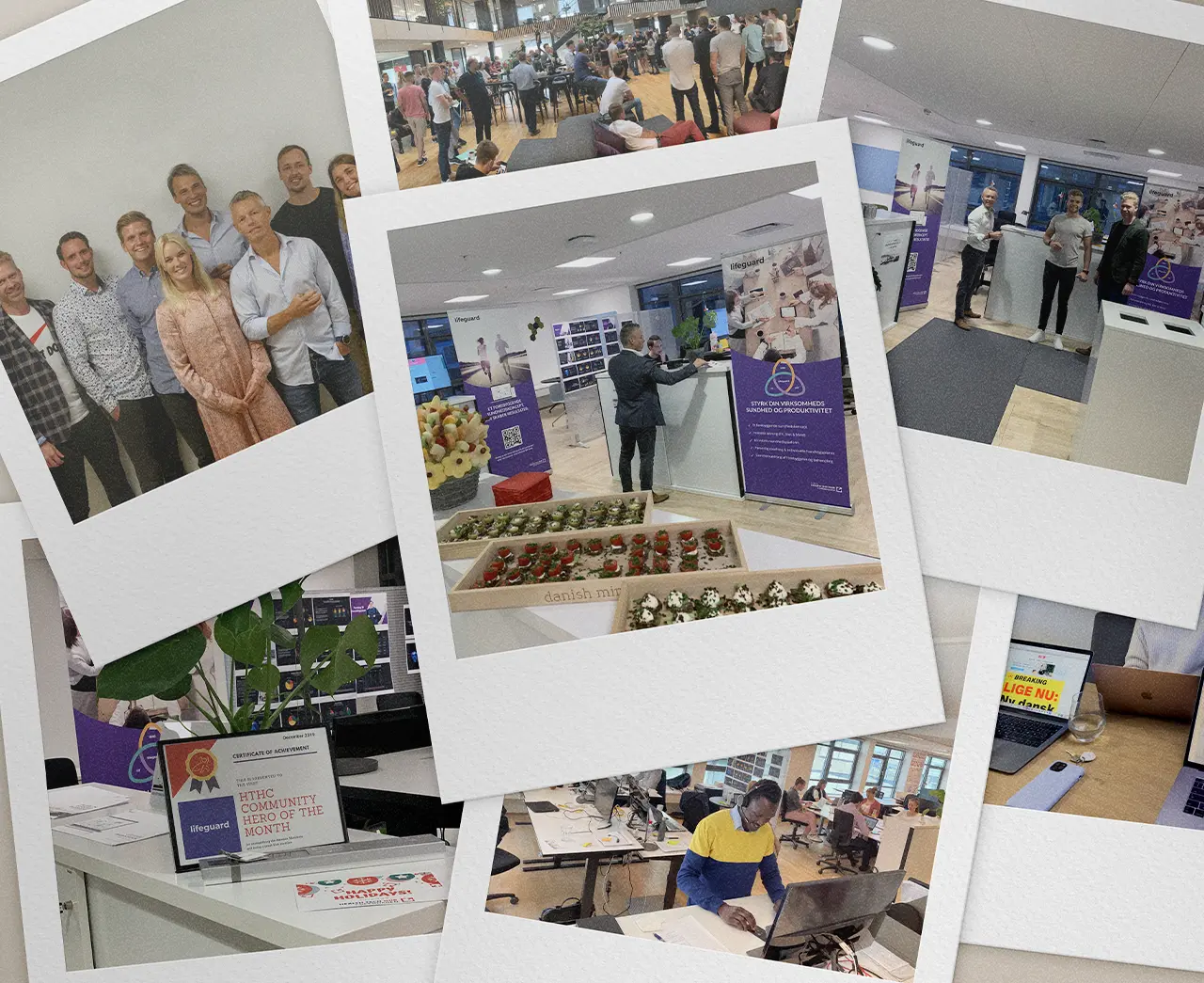
From 2015 to 2023, I was CTO and co-founder of Lifeguard Health ApS. Here, I worked on the development of a digital health platform that combined technology, data and personal coaching. The role included everything from product development, UX and software architecture to management of development teams, operations and business development. The eight years at Lifeguard shaped my approach to both technology, products and people and today form the foundation for much of what I work with.

Watch Lifeguard's Core-story →

Lifeguard presentation_1_4_

Slides #1 showing my last job
Slides #2 showing my last job
Slides #3 showing my last job

03_Employment_history_

My experiences

From 1999 to 2026, I have worked in different roles with design, technology, and digital business. Here are eight snapshots of that experience — the tasks I have solved, and the skills I have used along the way.

See them as cards, or explore periods and overlap on the timeline.

Experiences_

Image from my time at ESGRapporter

2024-2026, CTO & Co-founder

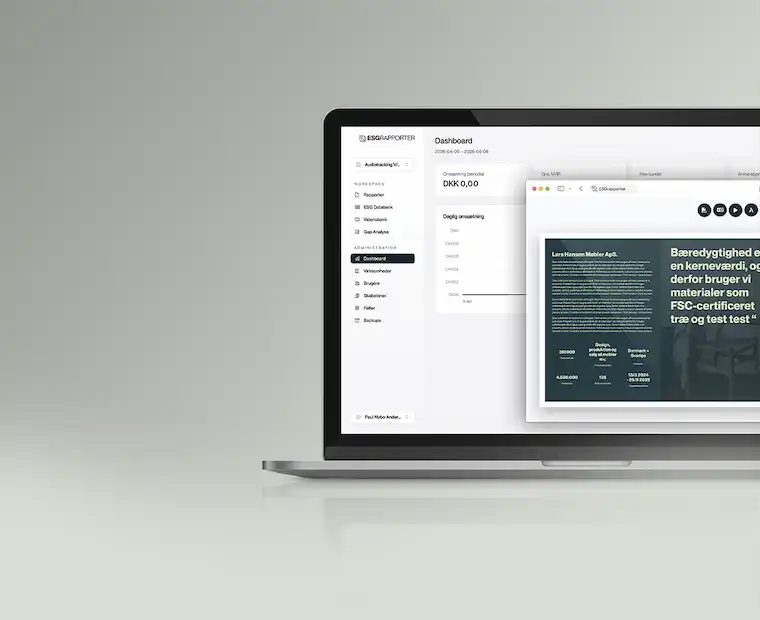
ESGRapporter

Now: ESGRapporter ApS.

We built the ESG reporting platform in Laravel, and I carried the technical responsibility for the direction, the reporting side and everyth ..

Image from my time at Revolvo

2024-2026, Senior Developer • UI/UX • Design

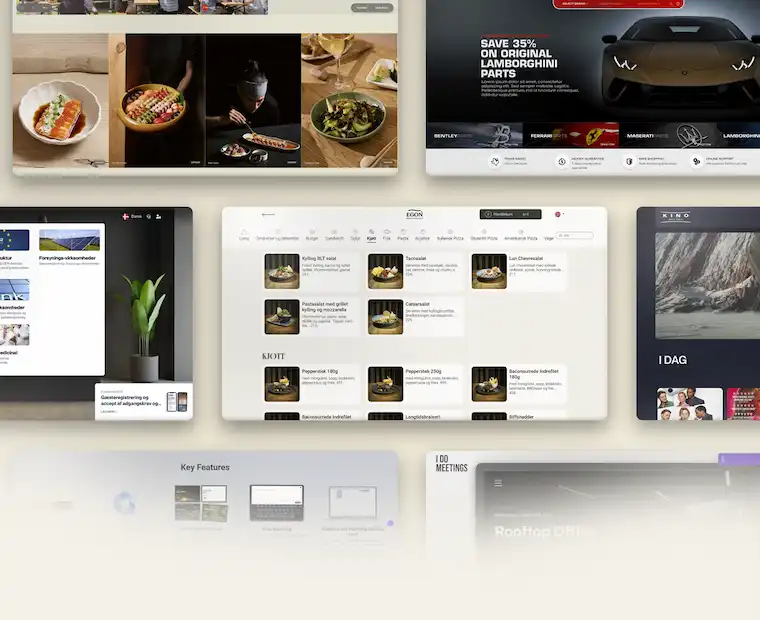
Revolvo

Now: Revolvo Aps. + BmyGuest ApS.

I handled development, UI/UX and graphic identity. 60% of my time went to BmyGuest and IDoMeetings, which Revolvo co-owned.

Image from my time at Lifeguard

2015-2023, CTO & Co-founder

Lifeguard

Now: Lifeguard Health ApS.

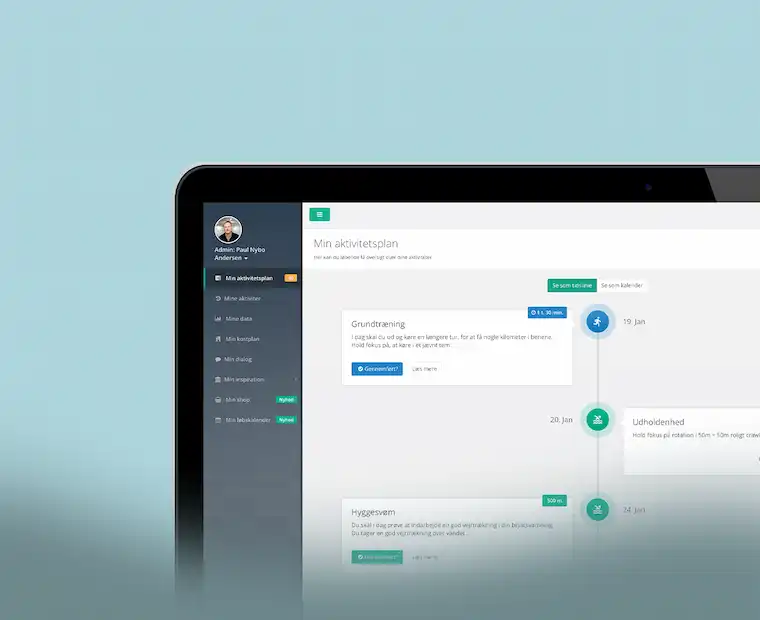
I built the LifeScore platform in Laravel with consent-based access to health data and an app for the wristband, and handled all UX and desi ..

Image from my time at VitalityGuard

2016-2018, CTO & Co-founder

VitalityGuard

Now: FIDIMI

We ran the Lifeguard platform white-labelled through a joint venture with Dansk Sundhedssikring. Maersk was the biggest client.

Image from my time at ContentCPH

2010-2015, Senior Digital Wizard

ContentCPH

Now: Charlie Tango

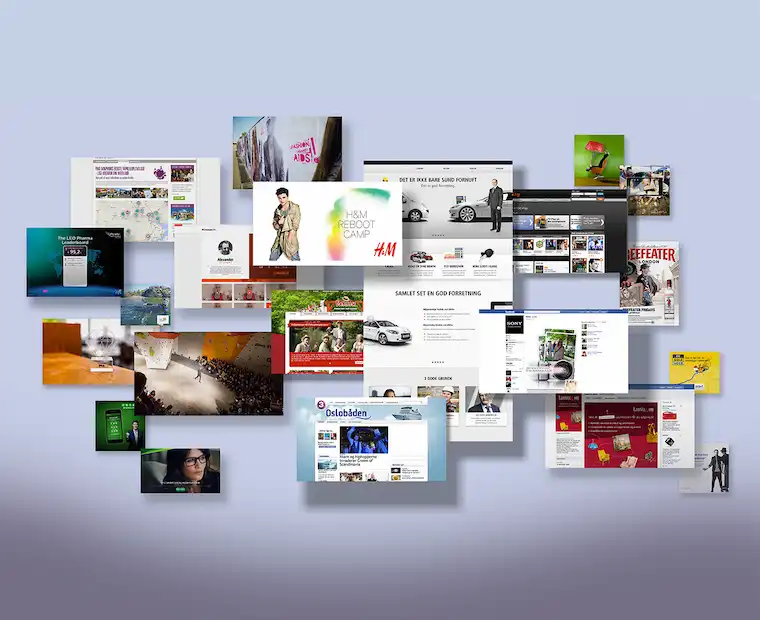
I built 60+ Facebook apps in PHP for Samsung, IKEA and H&M. The Nik & Jay campaign for Samsung won Danish Internet Awards 2014.

Image from my time at BOCCA WIRED

2009-2010, Freelance developer

BOCCA WIRED

Now: BOCCA

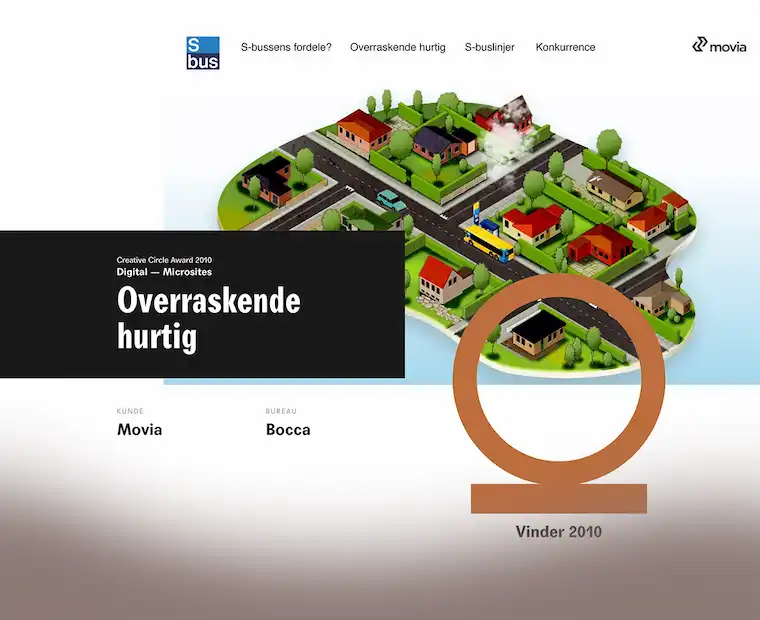
I built campaign sites for Movia and the Danish Heart Foundation, among them Overraskende hurtig, which took bronze at the Creative Circle A ..

Image from my time at EuroRSCG

2008-2010, Inhouse Freelance developer

EuroRSCG

Now: Havas Danmark

I won the agency's digital work back from the competitors and built an iPhone site and interactive product tools for GN/Jabra.

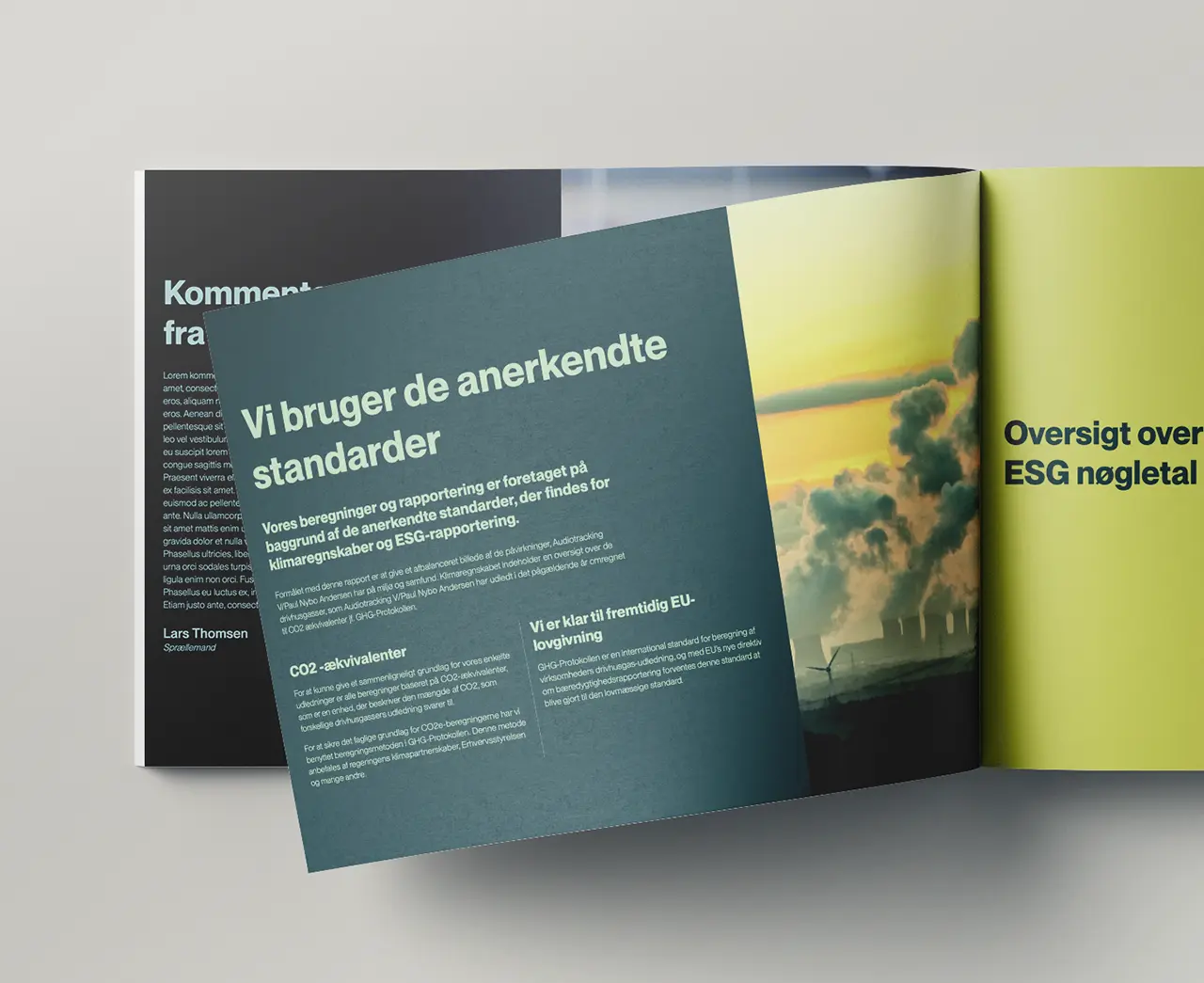
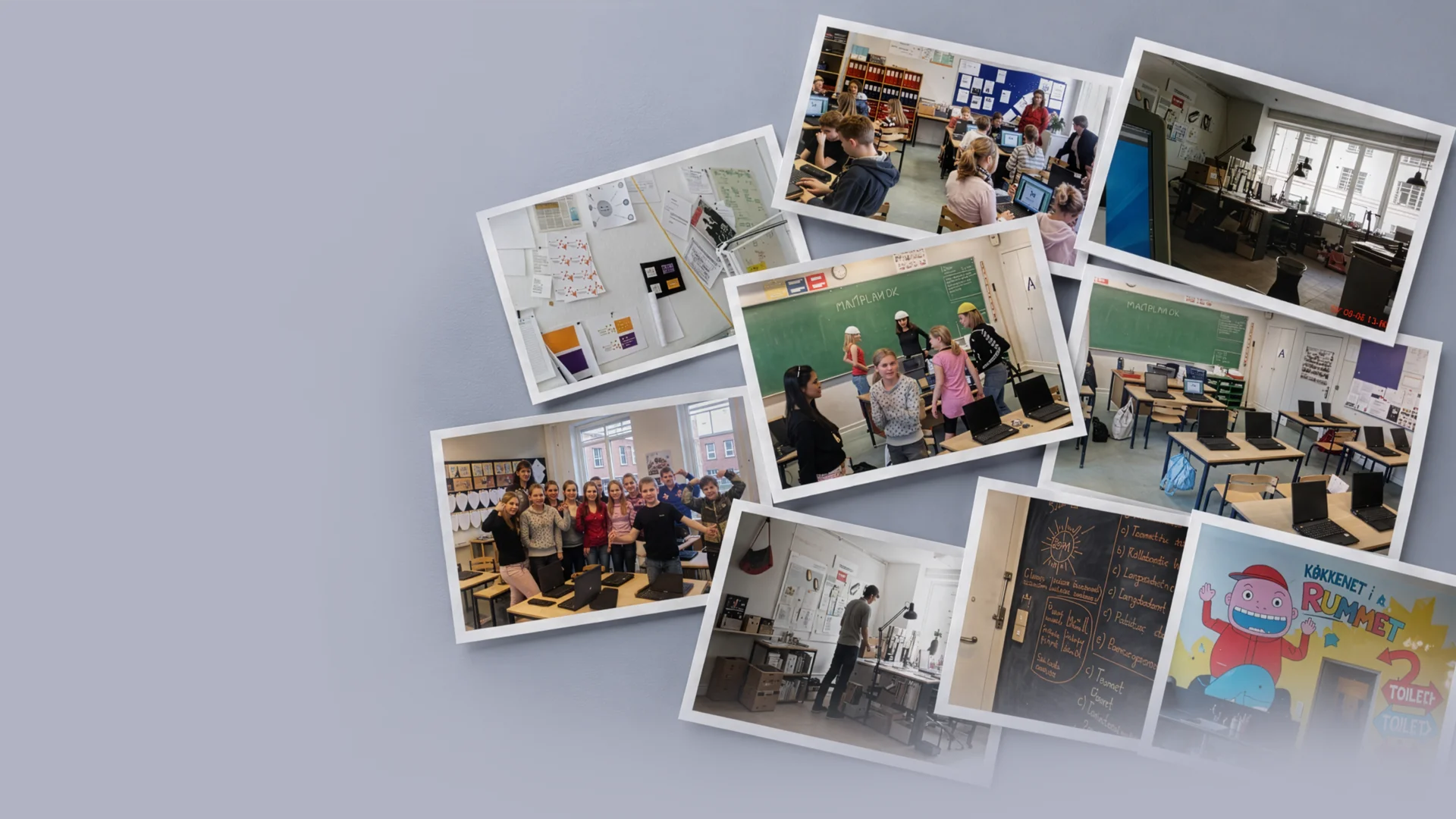
Image from my time at Makazilab

2005-2006, Co-founder & developer

Makazilab

Now: Makazilab

Co-founder of Makazilab, where I built the technical side of three educational concepts on intelligence types, entrepreneurship and creativi ..

Image from my time at Bandits Inc.

1999-2026, Sole proprietorship

Bandits Inc.

Now: Audiotracking v/Paul Nybo Andersen

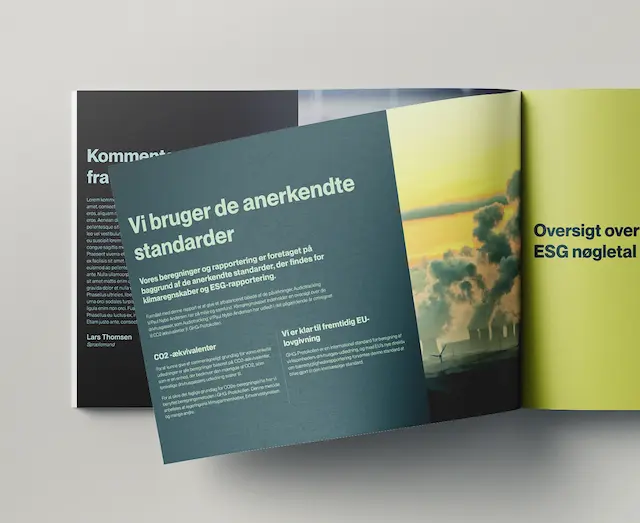
My own sole proprietorship since 1999. Through it I have sold web development to agencies that had the graphics but lacked the developer.

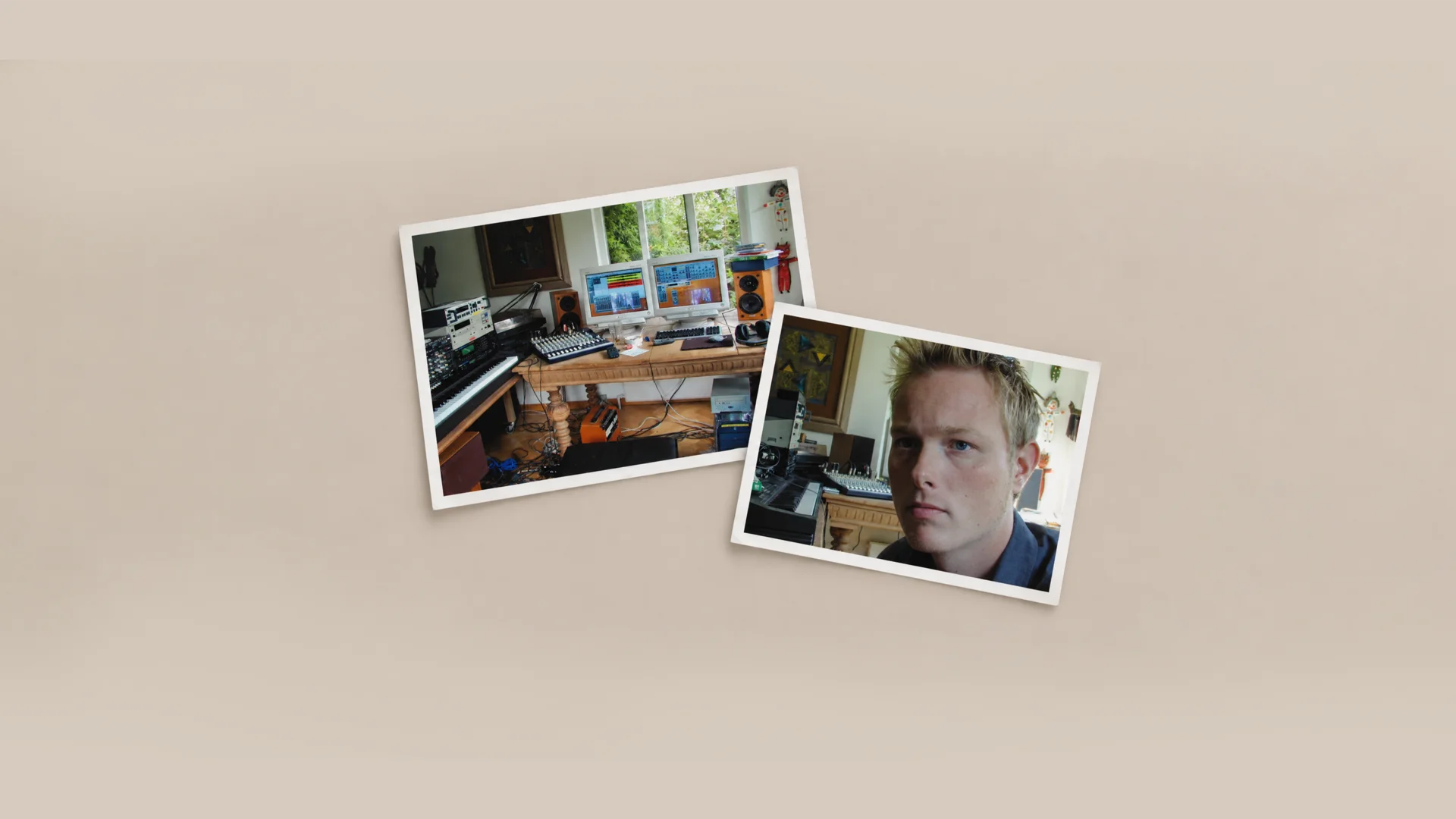
Image from my time at Audio Management

1999-2003, Co-founder & Digital Director

Audio Management

Now: Audiomanagement ApS

Co-founder of Audiomanagement, where we developed SoundIdentity® — sound branding and sound design for companies like Bang & Olufsen and bra ..

2025 2020 2015 2010 2005 2000

Select a case to read more

04_Skills + Stack_

My qualifications

As shown in the previous section, I have dealt with a wide range of tasks and taken on many different job roles, ranging from sound engineer to photographer, graphic artist, web developer, and CTO. The common feature in all of them has been my passion for creating meaningful experiences and my drive to create something unique.

In my approach, I have always been open to exploring new solutions to existing challenges, and I have never been afraid to acquire new knowledge. This has resulted in a wide range of skills that I have put together over time.

I have tried to list the most relevant ones here.

Rating

- " This is what I do best".

- " I'm pretty good at it".

- " I can do this just fine".

- " It's not what I'm best at, but I can if necessary".

- " I'm not good at it - but I'm willing to learn".

05_Writing_

Notes from the work

2026-09_

Should we build AI into our product?

"We need some AI in there." That might be the right call. I'd start by figuring out which problem the technology is actually meant to solve.

2026-09_

A good design doesn't start in Figma

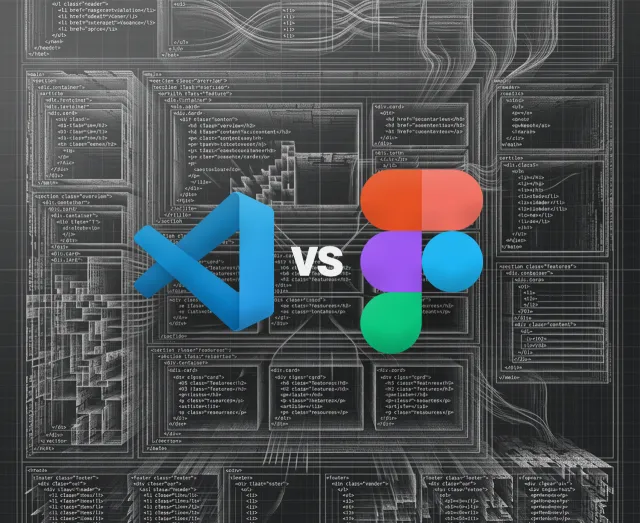
I can open Figma and start drawing a website right away. It's rarely a good idea. Because before I know what the page should look like, I want to know what it should get someone to do.

2026-08_

What is technical SEO – and what isn't it?

When a page isn't found on Google, it's tempting to start with the copy. But before I'd change the content, I'd make sure Google can actually find the page, read it, and understand which version should show up in the search result. That's a large part of what technical SEO is about - technical problems can stand in the way of even good content.

2026-08_

What does a website cost?

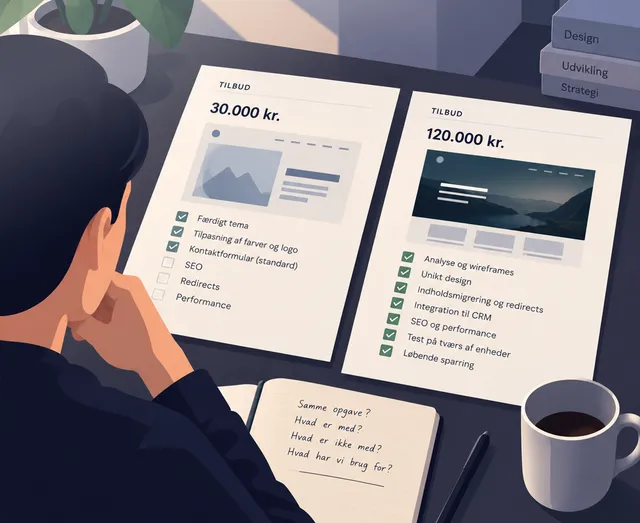
I've seen quotes for websites where one cost 30,000 DKK and the other 120,000. The obvious question is why one supplier is four times as expensive. The less obvious question is whether they even quoted for the same thing.

2026-08_

Why is my website slow?

A slow website can be a 4 MB image. It can also be 10 other things. The first question isn't what the site is built in – it's where the time actually goes.

2026-06_

Which CMS should you choose?

WordPress, Umbraco, Drupal, Shopify, Webflow, or something else entirely? My slightly annoying answer is usually: What is it for?

2026-05_

A visual identity has to work without the designer

A visual identity is easy to make look good on a screen. It gets harder when it has to go out into the real world – into a PowerPoint, onto an invoice, onto a sign someone edits themselves three years later.

2026-05_

Is my job as a graphic designer under threat?

AI-generated graphics have moved out of the computer and into the real world. The question is no longer whether AI can make graphics. It can. The question is what is then left of the graphic designer's work.

2026-04_

When should you switch CMS?

Most people ask the wrong question first. The interesting one is not which CMS is best – it is whether the CMS is even the problem.

2026-04_

WordPress — the short version

The thing that makes WordPress easy to extend is also the reason behind most of the problems you meet in older installations.

2026-03_

WordPress vs. headless — the difference in practice

Headless gives you freedom by taking things apart. But whatever you take apart has to be put back together again.

2026-02_

Sometimes I design in VS Code

Not because I have given up on Figma. But because sometimes it is faster to see whether an idea holds up in the browser than on a canvas.

2026-01_

The most expensive code is the code you never had to write

Not all expensive code is bad code. Some of the most expensive decisions I have been part of were well-written solutions to problems nobody had yet.

2025-12_

From coder to reviewer – how AI changed the workflow

In the short term, AI does not change what I know – it changes my workflow.

2025-11_

The art of inheriting a WordPress installation

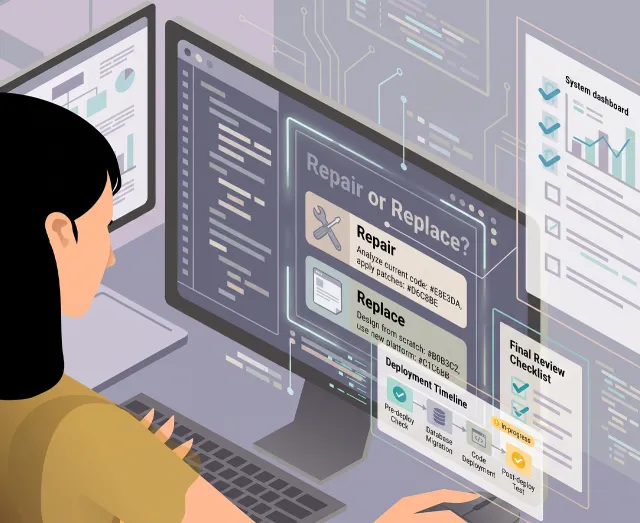
8 years, 34 plugins and a theme nobody dares touch. The job does not start by fixing anything – it starts by working out what is in use.

2025-08_

Ctrl, Cmd and C#

A language is learnable. It is the domain and the codebase that take time – and two machines that cost more attention than the syntax.

2025-02_

After a bankruptcy

Valued at 35 million at its height, bankrupt in December 2023, a new company seven months later. This is what sat in between – and what I took with me.

2024-11_

The report that had to sit in reception

When we built ESGRapporter, the competition had heavier calculation engines than we did. We bet somewhere else: on what the user was left holding being worth showing to someone.

06_When I'm not working_

A bit about me

I was born and raised in Copenhagen. But after a few years living with small children in an apartment in Østerbro, my girlfriend and I chose to move to a house in the suburb. We've lived in Hellerup for 11 years now, in a less pulsating neighborhood but no further away from Copenhagen than you can hop on the bike and then you're back.

I often do the latter; it's all about inspiration and new impressions. For the same reason, I still try to combine these trips with my passion for shooting photos. But since work has always been my hobby, it has been a challenge to find a balance between leisure and work projects.

When I'm not working, I spend a lot of time playing and listening to music. Unfortunately, over time, it has mostly become listening, which has been a very expensive but also rewarding passion.

The common feature of all my passions is the desire to create something. I hope this can benefit you.

TT38 profil

+25 years of experience with digital products ↓

Available for consulting, development, digital products and technical leadership.